


Bali has long been a dream destination for travelers, but in recent years, it has also become one of Asia’s most attractive real estate markets. Investors from around the world are drawn to the island’s unique blend of culture, lifestyle, and profitability. Yet, as interest grows, so do the questions.
At Ecoverse, we meet with investors daily, and the most common topic we’re asked about is ROI — what is realistic, what drives returns, and where the opportunities really are. To shed light on this, our General Manager, Evgeniy Obolentsev, sat down to answer the top investor questions on Bali’s ROI landscape in 2025.
How Will Bali’s Economic Growth Impact Returns?
Bali continues to outperform expectations, both economically and as a tourism powerhouse. In 2025, economic growth is projected between 5–6%, with tourism as the driving force.
Just in May 2025, Bali welcomed over 600,000 foreign visitors, a 24% increase year-on-year. Across the first five months of 2025, more than 2.6 million international arrivals were recorded — a 14% jump compared to the year before.
These numbers matter because tourism is the backbone of real estate performance in Bali. More visitors mean stronger demand for accommodation, higher occupancy rates, and ultimately, better rental yields for property owners.
What ROI Can Investors Really Expect?
One of the biggest misconceptions in Bali’s real estate market is the promise of sky-high returns. You’ll often hear developers claim 18–20% ROI, but these figures are typically tied to speculative, high-risk projects. The reality is more nuanced:
- 3–5% ROI → Mature, non-tourism areas
- 5–10% ROI → Stable tourist zones with high competition
- 10–15% ROI → Trendy areas with strong demand and professional management
- 17–20% ROI → Extremely rare, high-risk opportunities in highly desirable but speculative spots
The most sustainable path lies in the 10–15% ROI range, where returns are strong yet realistic, backed by location, concept, and quality management.
This is exactly where Ecoverse sits. Our model is built for conscious investors who care about long-term stability as much as strong returns. If you’re looking for a quick flip or speculative gamble, Bali offers plenty of options — but if you’re seeking risk-adjusted returns, eco-conscious design, and future-proof demand, Ecoverse is designed for you.
Which Areas Offer the Strongest Potential?
The established hotspots — Canggu, Seminyak, Berawa, Pererenan, and Uluwatu — remain highly desirable thanks to their proven track records. These areas benefit from steady tourist traffic, established infrastructure, and international recognition. However, supply saturation is a growing challenge. With hundreds of new projects launching annually, competition for both renters and buyers is intensifying, which can put downward pressure on yields.
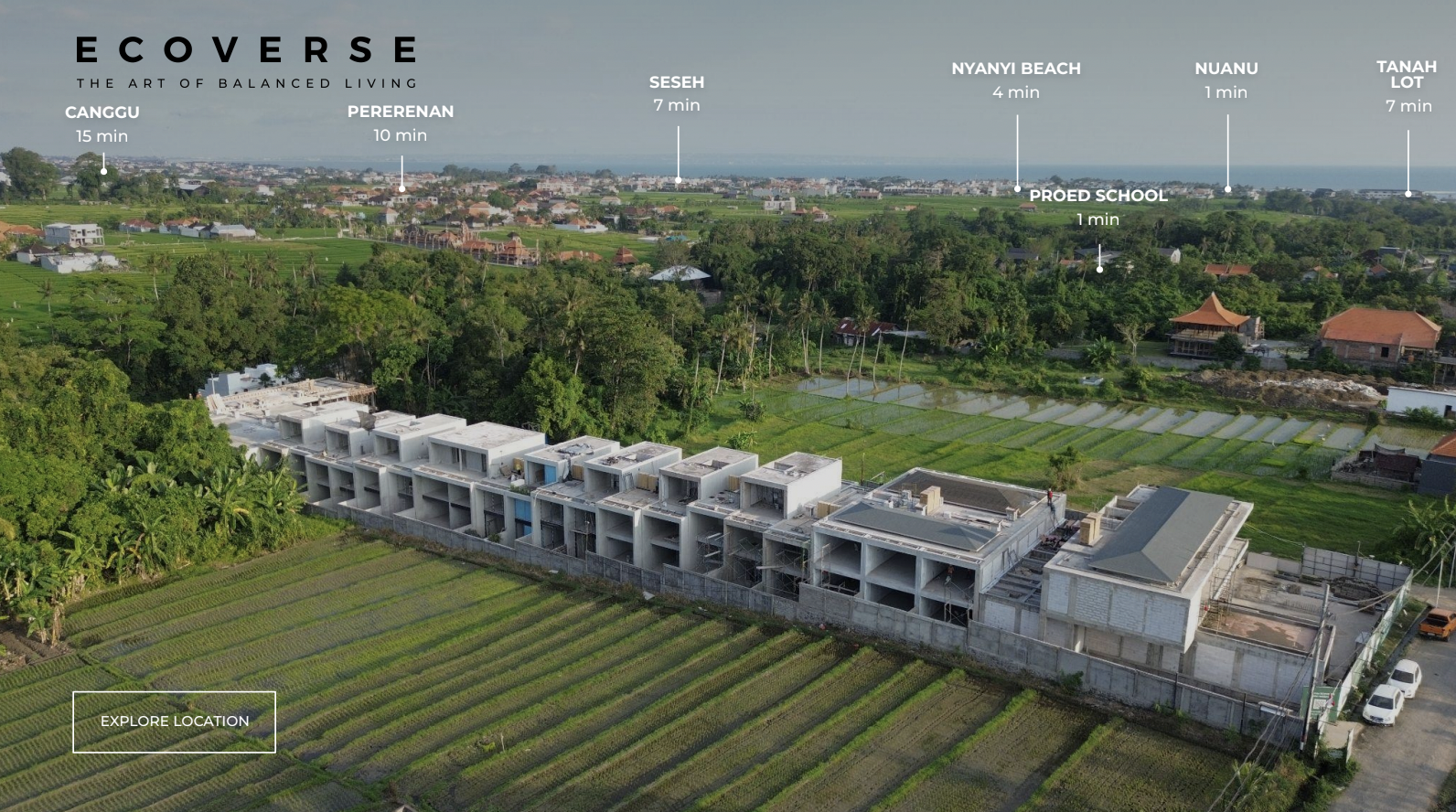
This is why savvy investors are now looking beyond saturated zones toward Bali’s emerging lifestyle destinations. Among these, Nyanyi stands out as one of the island’s most compelling growth stories in 2025.
Just 15 minutes from Canggu, Nyanyi offers a rare balance of accessibility and exclusivity. Known for its rice fields, ocean views, and serene village atmosphere, the area is now being enriched by Nuanu Creative City — a 44-hectare landmark project that integrates art, education, wellness, and sustainability. Rather than disrupting Nyanyi’s character, Nuanu is strengthening its identity as Bali’s next center for cultural and creative innovation, making it one of the most compelling locations for long-term investment.
With Nuanu as an anchor, Nyanyi is rapidly evolving into a world-class destination for conscious tourism, innovation, and community living. This transformation is attracting global talent, entrepreneurs, and investors who see the long-term potential of the area.
For real estate investors, the implications are clear:
- Strong Demand Drivers → As new cultural hubs, wellness centers, and eco-conscious projects come online, Nyanyi is set to draw a new wave of lifestyle-driven travelers.
- Limited Land Supply → Unlike sprawling tourism zones, Nyanyi retains its natural character, with land parcels near rice fields, jungle, and the beach becoming increasingly scarce.
- Capital Appreciation Potential → Entering early in Nyanyi positions investors for outsized growth as infrastructure develops and the area gains international recognition.
In short, Nyanyi represents a unique blend of long-term growth, lifestyle appeal, and ROI resilience. It’s not just another hotspot — it’s Bali’s next chapter.
For a deeper look at Nyanyi’s rise and the role of Nuanu Creative City in reshaping Bali’s real estate landscape, explore our dedicated article:

Why Invest in Hospitality-Grade Eco Residences?
The premium segment in Bali is evolving rapidly, and the strongest returns are no longer tied to traditional villas or hotels. Instead, hospitality-grade eco residences are leading the shift — combining privacy, lifestyle, and sustainability in a way that today’s traveler values most.
Undersupply Meets Rising Demand
Despite Bali’s popularity, there is still a shortage of high-quality, professionally managed residences that meet international standards. Demand is outpacing supply in prime and emerging areas, keeping occupancy rates high. For investors, this imbalance translates into consistent rental yields and capital appreciation.
Shifting Tourism Trends
Modern travelers are seeking experience-driven stays — not just rooms, but residences that blend comfort, design, and connection to Bali’s culture and nature. Eco-residences, equipped with private spaces, smart-living features, and sustainable design, deliver this experience. Guests are willing to pay more for personalized, lifestyle-rich hospitality, which directly supports stronger ROI.
Lifestyle + Investment Value
Ecoverse was designed to offer both a lifestyle benefit and strong investment performance. Owners can enjoy their residence when desired, while professional management ensures it continues to generate passive income in Bali’s thriving rental market. This balance of personal use and financial return makes eco residences one of the most resilient investment categories.
The Big Advantage
Simply put, hospitality-grade eco residences strike the right balance:
- They meet growing traveler demand for sustainable, lifestyle-rich stays.
- They offer scarcity value in a market undersupplied with true premium residences.
- They generate reliable ROI through professional management and long-term capital growth.
This is why the eco-residence model is regarded as one of the most future-proof investment strategies in Bali real estate today.
How Do Infrastructure and Regulations Shape ROI?
Infrastructure is a game-changer in Bali’s real estate landscape. Projects like the Ngurah Rai airport expansion, new road connectivity, and the rise of smart community hubs are opening up previously undervalued areas.
At the same time, improved legal frameworks and streamlined construction regulations are making it safer and easier for foreign investors to enter the market with confidence.
Overlay this with the growing popularity of eco-living and smart-living concepts — solar-powered real estate, wellness and slow living, and fractional ownership — and it’s clear the market is moving toward sustainable, experience-driven real estate.
What Are the Key Risks Investors Should Know?
When looking at Bali real estate investment opportunities, the biggest risk is believing in the hype. Many projects advertise 20% ROI, but in reality, those numbers are almost always smoke and mirrors. They rely on unrealistic assumptions, speculative locations, or incomplete financial models that underdeclare many facts..
The real risks can be summarized into a few categories:
- Overpromised Returns → Developers pitching “guaranteed” 18–20% ROI without proven track of such in the past. Once operational costs and market competition set in, actual yields tend to fall far below expectations.
- Saturated Markets → Popular areas like Canggu and Seminyak are overcrowded. Even with strong demand, saturation leads to falling occupancy rates, lower nightly rates, and reduced ROI.
- Weak Management → A premium villa in Bali doesn’t generate premium returns without hospitality-grade management. Poor guest services, weak digital marketing, or lack of maintenance quickly eat into profitability. Many “DIY” villa owners discover that inconsistent operations are their biggest revenue leak.
- Regulatory Blind Spots → Bali’s government has made significant strides in streamlining property regulations and foreign ownership structures, but this is still a factor to monitor. Choosing a project with transparent legal due diligence and a professional development team reduces this risk dramatically.
- Market Cycles & Tourism Dependency → While Bali’s tourism is strong, global shifts can affect visitor numbers. That’s why projects must be ready with built-in back-up strategies from construction time. At Ecoverse Residences, we are designed to pivot between short-term hospitality rentals and long-term leases, while eco-tech features and high construction quality safeguard resale value. This ensures competitiveness and stability throughout market cycles.
The key lesson? Chasing the wrong project is the biggest risk. The safest strategy is to focus on location, concept, and management — the three pillars that determine whether ROI is sustainable.
Why Ecoverse Represents a Balanced ROI Strategy
Finding the “right balance” between risk and return in Bali’s property market isn’t easy. With my background in both commercial and non-commercial real estate, I’ve seen how rare it is to come across a project that ticks all the boxes.
Here’s why:
- Transparent, Realistic Returns
- Trusted Co-Developer: OXO Group
- Full-Service Investment Model
- Prime Emerging Location: Nyanyi
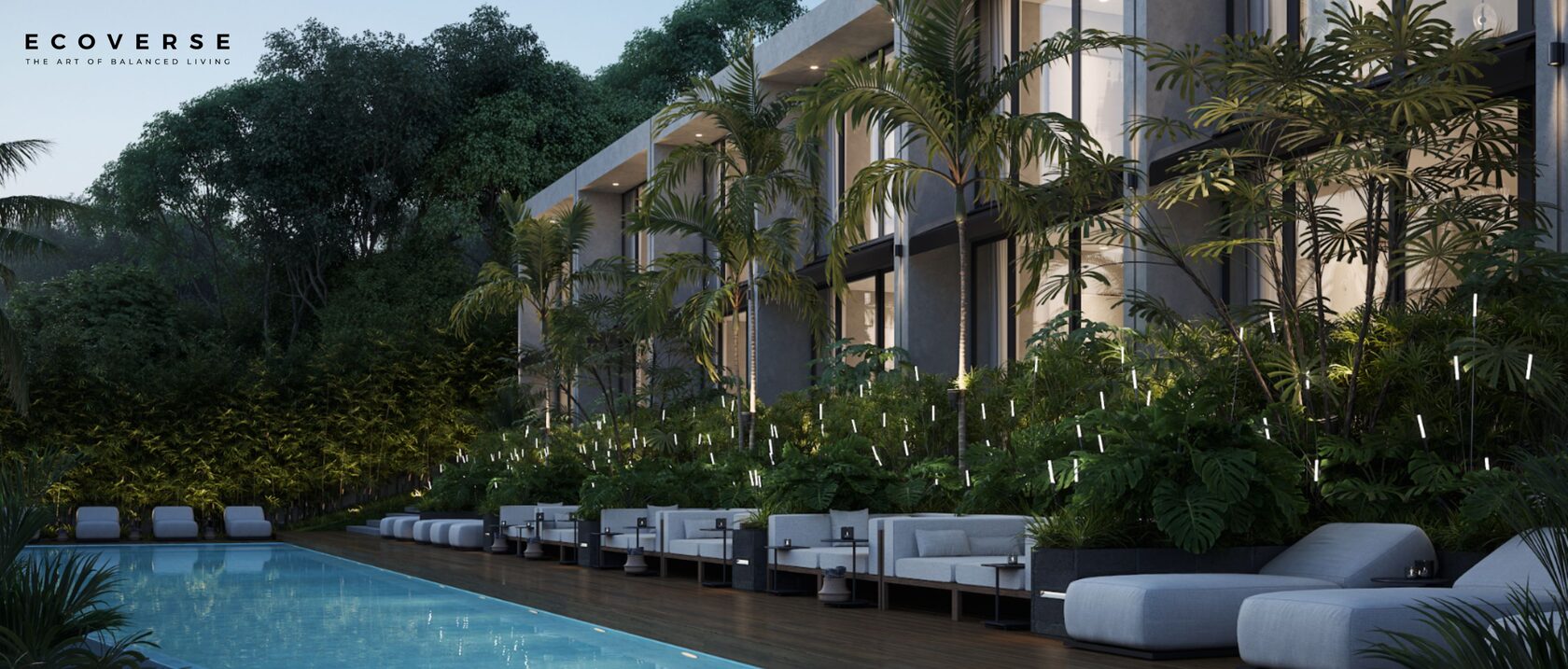
- Future-Proof Eco Design
- Passive Income Through Professional Management
In short: Ecoverse isn’t a speculative gamble, it’s minimizing risk and maximizing reward while everyone else competes in oversaturated markets. It combines transparency, sustainability, and professional management in one of Bali’s most promising growth corridors.
For deeper insights into what sets Ecoverse apart, check out these journal entries:
Final Word: Bali ROI in Perspective
Bali remains one of the most dynamic real estate markets in Asia. With the island’s tourism surge, infrastructure upgrades, and evolving hospitality trends, investors can achieve attractive returns — if they know where to look.
The lesson? Don’t chase inflated promises. Aim for balance. The sweet spot lies in projects where 10–15% net ROI, future-proof eco-design, and premium management combine to create both security and upside.
👉 Download our ROI Calculator today.


